
My ISMRM blues vol. 3: Bringing MRI to a country far from you
The good, the bad, and the future of MRI outreach

After the first two ISMRM blues posts (vol. 1, vol. 2), in which I was quite critical of the society, I expected silence from the ISMRM. Instead, they responded by inviting me to speak on the topic that drew the most attention in my unofficial survey: bringing MRI to low- and middle-income countries (LMIC).
This topic has been discussed many times, at the plenaries, the study group meetings, the abstracts, and the weekend educational sessions where leaders from India, South America and Africa already described their efforts and the challenges associated with bringing MRI to the Global South. I do not want to repeat what they have already said. As this is a session about pitfalls in MRI translation, I will focus on the blind spots of MRI outreach efforts, and how global initiatives can help (and sometimes hinder) MRI adoption in developing and resource-limited countries1.
So here I am at the annual meeting in Cape Town, with the difficult task of being both supportive and critical of existing MRI outreach efforts. In preparation for this task, I have spent the past six months talking to many community members, including leaders of the ISMRM and its African chapter, the ESMRMB and its CAMERA initiative, OSI, A4IM, UNITY, the SMART Africa Network, MRI companies (Open Imaging, Hyperfine, Neuro42) and philanthropic organizations (Gates Foundation, Chan Zuckerberg Initiative). I also conducted a non-official survey that collected over 50 responses from the ISMRM community (link). The survey is still open and I encourage you to respond to it.
The picture that has emerged is that of a well-meaning community, where every stakeholder has a slightly different idea of how they want to contribute to their noble mission of bringing MRI to the developing world. However, many community members feel there is fragmentation and a lack of coordination on the ground. As past ISMRM president Derek Jones said at this weekend’s A4IM stakeholders meeting, there’s a wasted duplication of efforts. He speculated on the reasons for this, some of which come from a genuine desire to help, and some from a desire to demonstrate leadership.
This post is as close to investigative journalism as I can get. Facts are always subject to interpretation, so what is presented here is my perspective on the information that I collected during my interviews. Coming from a journalistic family I deeply cherish the journalism standards of fact-checking and protecting sources. If you notice any inaccuracies, I encourage you to contact me (e-mail, Twitter, Bluesky, LinkedIn) or voice your opinion in the comments below.
THE GOOD
I congratulate everybody who persevered in bringing the ISMRM to Africa, despite concerns about the safety, profitability and the carbon footprint of the annual meeting. This was a historic event, and we need to continue to hold future ISMRM meetings in the continent. It is great to be in Cape Town, and I think the current leadership did an impressive job in the face of serious headwinds, including funding cuts, increased registration fees and a significant drop in attendance.
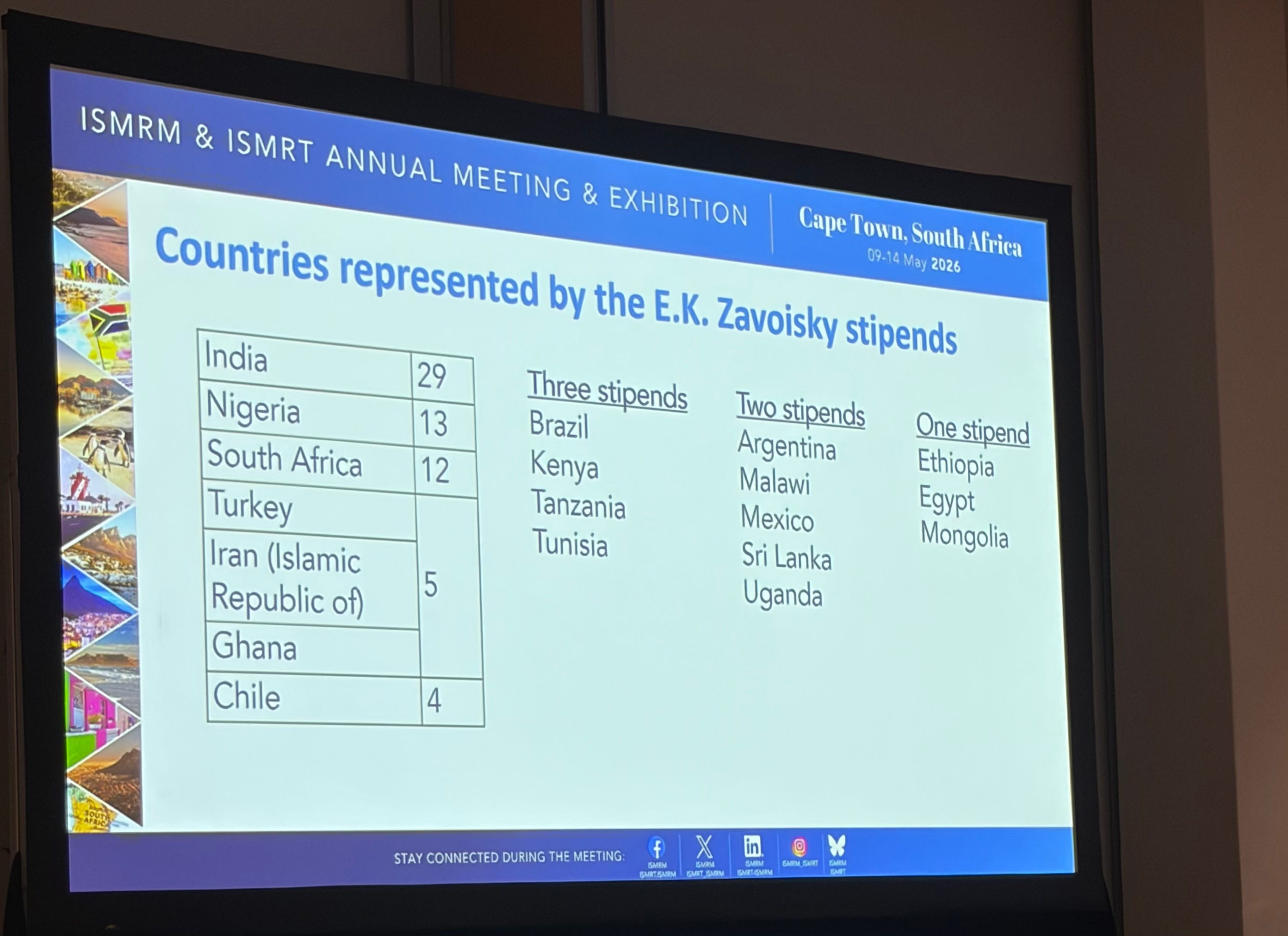
Once it became clear that the Gates Foundation will not be contributing to the 2026 annual meeting (despite prior indications of support), the community came together and found creative ways to bring researchers from developing countries to the meeting. First, the budget for the Zavoisky stipends was increased to $500K, and every abstract author from a low R&D country became eligible for the stipend. Second, registration costs for South African researchers were significantly reduced, although the same did not apply to other researchers from Africa. To cover this gap, individual labs used their grant funds to pay for the expenses of their African collaborators. Also, Philips, Siemens and United Imaging pitched in to bring 11 more African researchers to the meeting.
Furthermore, the ISMRM updated its definition of eligible countries (link) so that every resident of a country with R&D expenditure below US$250 per capita is now eligible for the Zavoisky stipend and gets dramatically reduced membership fees. This is excellent news, spurred in part by a complaint I made in 2024 to the ISMRM leadership that Balkan countries are now considered upper-middle income and are therefore not eligible for any of the above benefits. However, it wasn’t just the Balkans that were misclassified. According to the old definition, even countries such as Cuba were not eligible for the subventions because the World Bank classifies it as upper middle income.
As a result of all the above efforts, many researchers from LMIC countries got a chance to come to Cape Town, including 98 abstract authors who received the Zavoisky stipend.
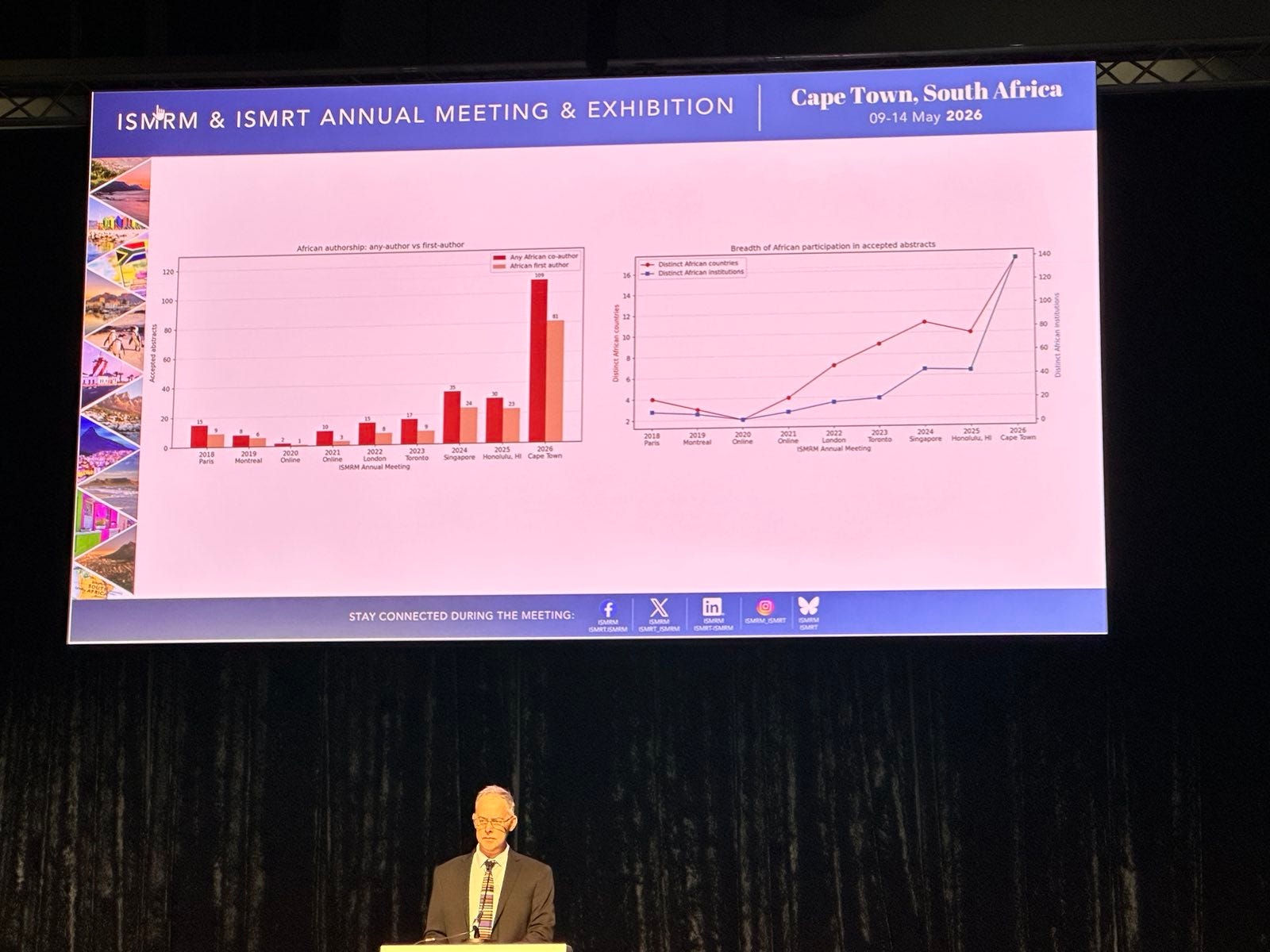
While the attendance from other countries was not reported at the opening ceremony, Mark Griswold shared that the number of African abstract authors at the meeting has more than quadrupled, and that there are now 100+ African institutions from 14 African countries represented in the meeting. These are impressive numbers!
THE BAD
However, I am not convinced that these efforts are the best way to bring MRI to the developing world. Yes, it is nice to have participation from Africa and it is great that hundreds of researchers are now deeply involved in bringing MRI to the continent. Perhaps it is time to take a moment and think about the opportunity cost of these accomplishments.
If you think that the opportunity cost is low, just ask all the people who invested in the stock market for ultra low field MRI, all the MRI researchers (including many Africans) who could not come to Cape Town, and all the other LMIC countries that are getting left behind. But I am rushing ahead of myself… Let’s rewind back to 2023!
2023 was the year when a partnership between ISMRM, Hyperfine, the UNITY project and the Gates Foundation was announced:
https://www.auntminnie.com/clinical-news/mri/article/15633613/hyperfine-partners-with-the-ismrm-gates-foundation
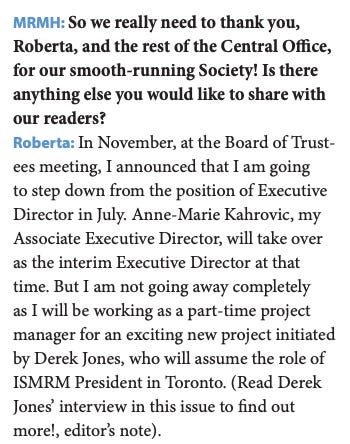
Many ISMRM members may not have been aware that the Gates Foundation had separately funded the participating entities. In my view, this created a concentration of influence around a small number of organizations involved in MRI outreach efforts. To top everything off, the ISMRM executive director Roberta Kravitz announced that she is stepping down from running the society, but will continue working on the Africa initiative. To some observers, the partnership raised questions about how inclusive the resulting decision-making processes were.
My criticism of Sean Deoni from the Gates Foundation is well documented elsewhere, but he has been kind enough to engage with me on many occasions. To his credit, he is in an unenviable position of being criticized for supporting projects over which he has no direct control. Be that as it may, here is how the Gates Foundation funding choices have played out over the past three years.
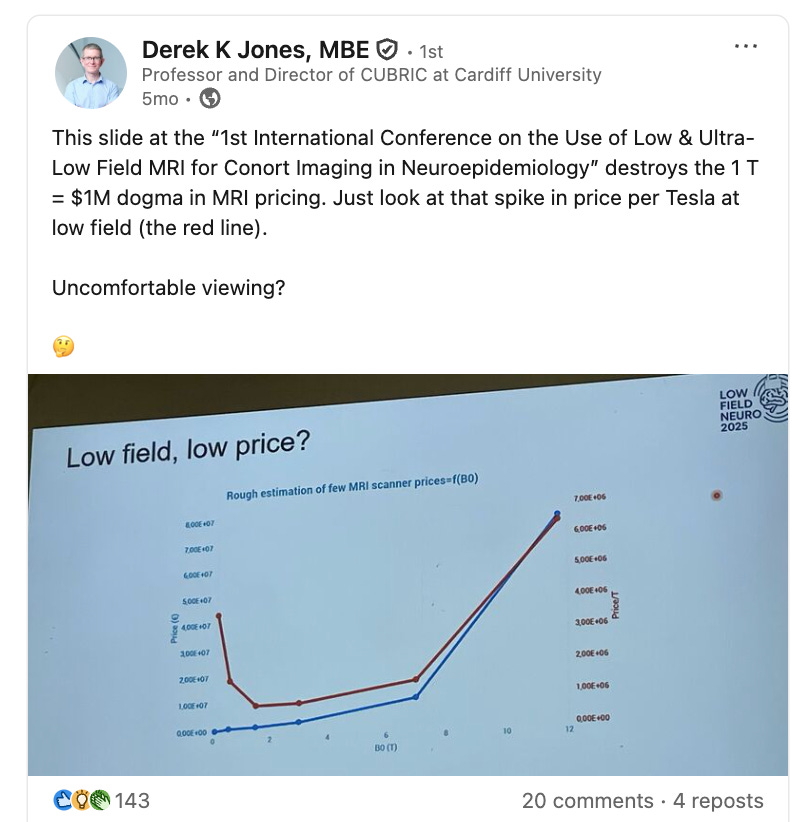
The launch of Hyperfine was truly game-changing. The technology was exciting, the Swoop scanner got FDA approval, and the price tag was very acceptable ($50,000 according to this 2022 Nature scientific reports article). The UNITY project, with support from the Gates foundation, distributed at least 25 Hyperfine Swoop units across the developing world, promising improvements in healthcare and accessibility. However, only a year later the price of the scanner shot up to $250,000, according to this 2023 Science article2. By this time, the Hyperfine stock dropped by more than 80% of its original value.
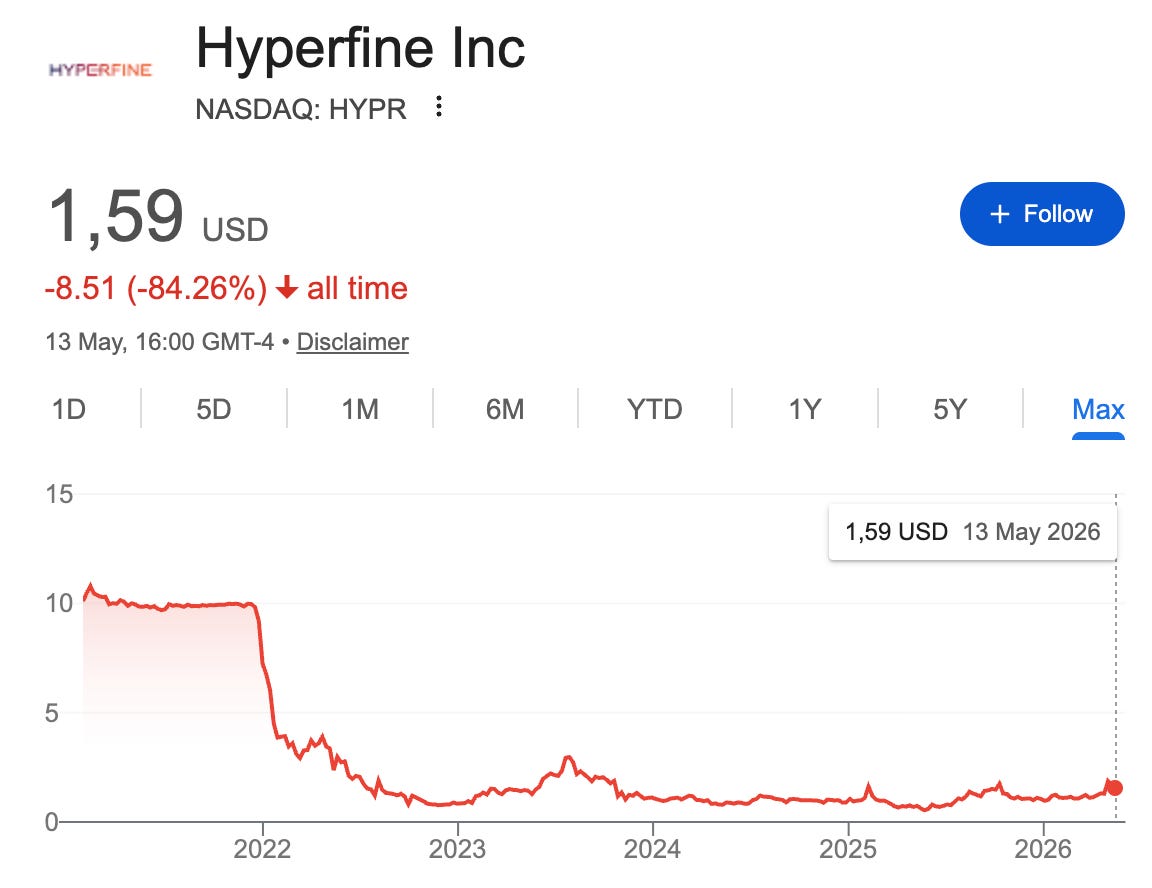
Some observers may interpret this as reflecting investor concerns about the commercial prospects of the company’s closed-source approach. Critics have also raised questions about the role of AI-based image enhancement in comparisons with high-field MRI systems. The company built up hype thanks to its FDA approval, but it appears to be far from fine. Because of the high price tag of the Hyperfine scanners, ultra low-field now has the reputation of being very expensive.
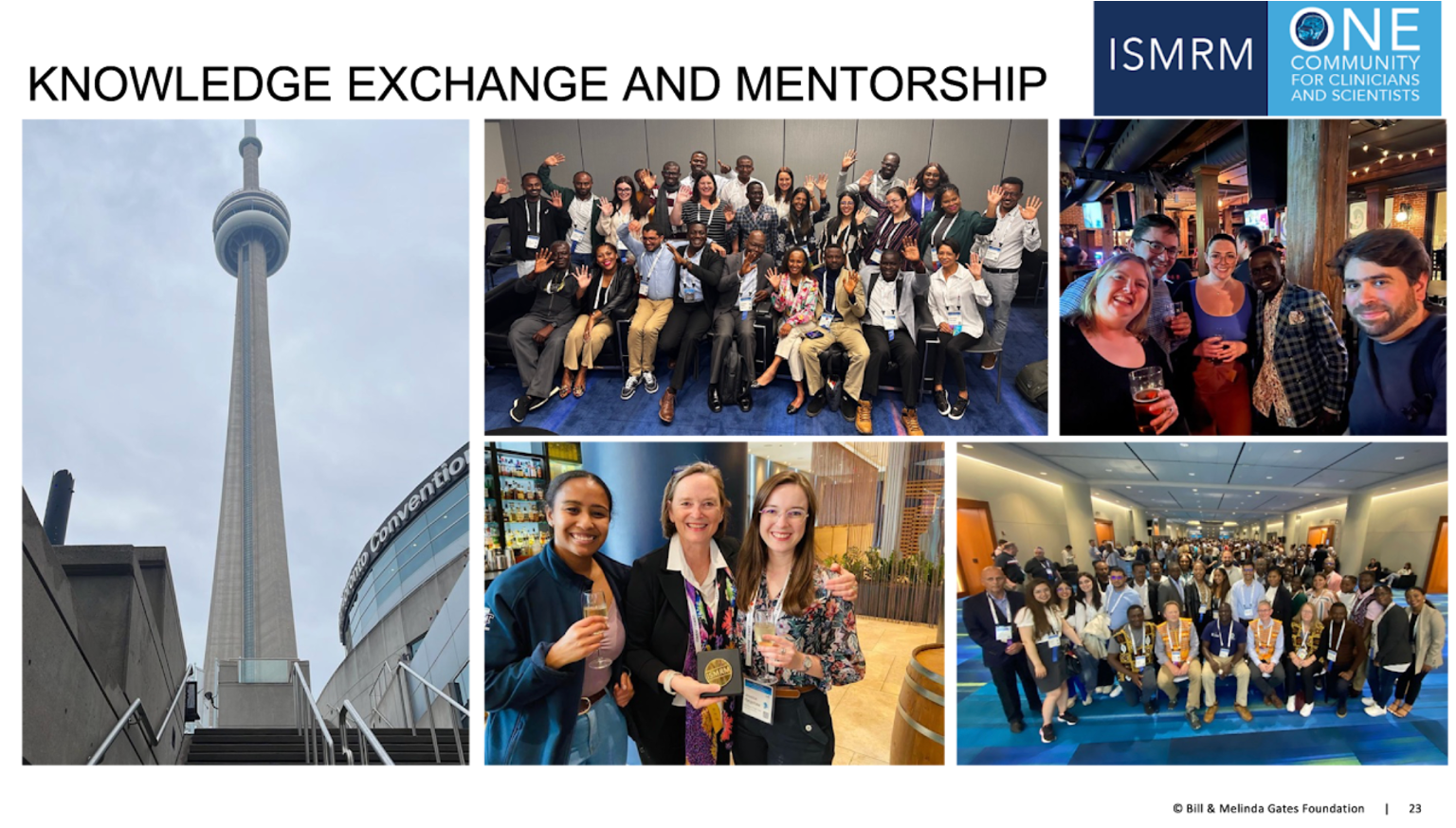
MRI equipment aside, there is also the issue of inclusivity and participation of researchers from LMIC countries. For years the society had almost no representation from Africa. Then in 2023 one hundred UNITY and/or ISMRM African chapter members were flown to the ISMRM meeting in Toronto with funding from the Gates Foundation. This was a generous gesture on the side of the funders, but very few ISMRM members know that all 100 participants were flown to Toronto on business class airplane tickets. This generous level of support likely helped build goodwill within parts of the community and may have contributed to the momentum behind bringing the meeting to Cape Town. At the same time, the scale of the spending prompted questions among some members about whether the resources could have been allocated differently.
Once it was decided that the ISMRM is coming to Cape Town in 2026, the Gates funding for African researchers at the annual meeting started to decrease. A cohort of African participants was once again present at the educational sessions in Singapore (2024), but this time the Gates foundation decided the Africans would not stay for the entire annual meeting. Instead they came to a 2-day UNITY conference, attended the ISMRM educational sessions, took a picture, and were then flown back to Africa. I know there were good financial reasons for this, but the bitter feeling remains that Africans were treated differently from the other conference participants.
At the ISMRM meeting in Hawaii (2025) it was noted that the society’s finances are under strain, and a registration fee increase for the Cape Town meeting was announced. Funding cuts around the world made it difficult for many researchers to pay for their trip to South Africa. By 2026 the funding to the ISMRM from the Gates Foundation had stopped, so now everybody was scrambling to find ways to bring Africans to the African meeting.
This is what happens when you impose an initiative onto an entire continent that is very diverse. A combination of top-down approaches, non-transparent solutions, expensive “cheap” scanners, and an infrastructure that cannot support them, makes people lose heart. One can argue that the symbolic gesture is enough, but there is a real opportunity cost to the symbolism. Millions of dollars were lost by investors, thousands of regular ISMRM members decided to skip the annual meeting, and tens of developing countries were left out of the spotlight.
THE FUTURE
What if we actually adapt to the situation on the ground and provide the solutions that the developing world really needs? To make ultra-low field reality, we need solutions under $100K. Fortunately, such solutions exist, including designs by OSI, OCRA and the Affordable MRI project. There are also serious startups (OpenImaging/Multiwave/Physio MRI/Neuro42) that are producing commercial systems for a fraction of the cost of Hyperfine, and many of them maintain the spirit of open-source and scientific collaboration. Some of these scanners are very easy to put together, as evidenced by the ERNIE Toolkit created by the CAMERA-IMAGINE consortium. Recently, these initiatives have been highlighted in special issues by the journal MAGMA and NMR in Biomedicine.
There is also the MRathon, a grassroots initiative that we started in 2019. That is when 50+ participants from Australia, Brazil, Canada, Germany, Israel, India, Japan, Netherlands, Portugal, UK, US and Uganda came together to work on collaborative open science projects. Since then, we have organized three more hackathons in Toronto (2023), Singapore (2024) and Hawaii (2025).
If you would like to learn more, and get involved in building low-field open-source solutions, join us at the upcoming MRathon in Stellenbosch on May 15-17. While there is abundance of low-field solutions, at the hackathon we want to pay particular attention to documentation, as it is very important to be able to organize the huge amount of available information.
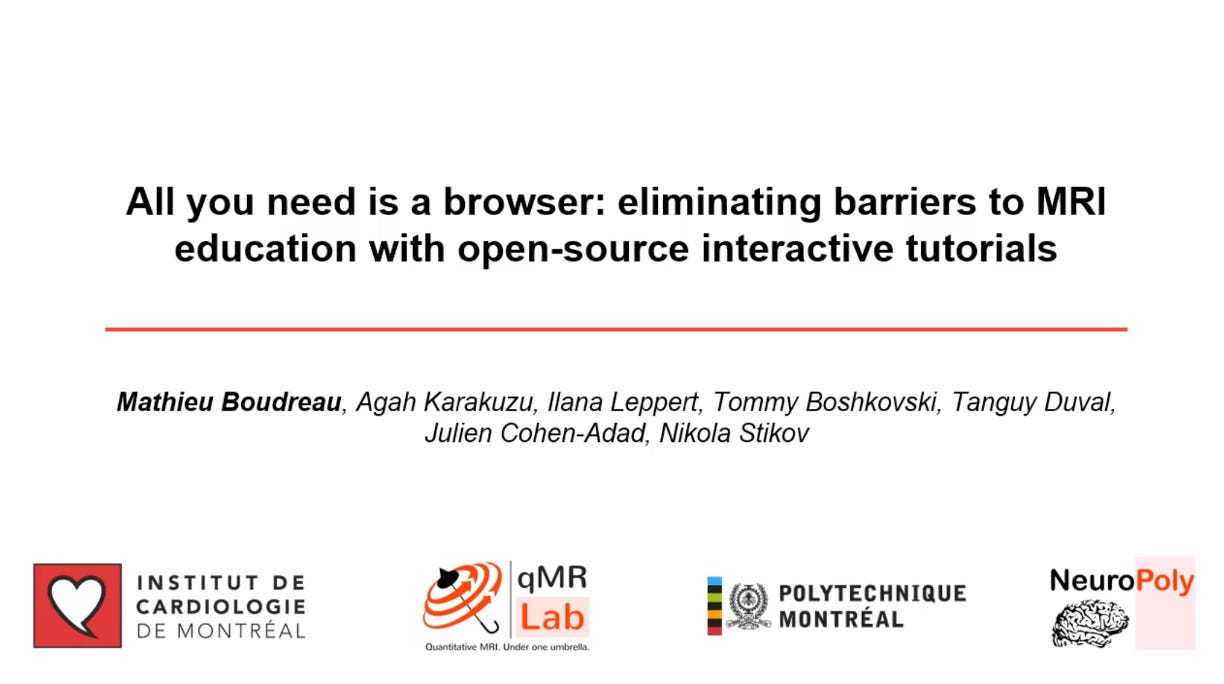
My lab started this effort in 2019 by creating open-source interactive tutorials for MRI education in Africa. Since then we have developed a powerful infrastructure (Evidence/NeuroLibre) for hosting such tutorials and we can’t wait to see what comes out of the hackathon.
Second, the annual meeting should not be the primary mechanism for outreach of an international society such as the ISMRM. Africa is a huge continent, and a meeting at its southern tip does not make it easier for Africans to attend, not to mention Indians, South Americans and residents of other countries from the Global South. Many of them would have a much easier time attending the meeting if it was held in the standard ISMRM locations, or even in Northern Africa.
If the goal is to bring MRI to developing countries, the first step should be decentralizing MRI outreach. The ISMRM is already doing this with virtual mini-hubs for conference attendees, but there used to be a much better (and cheaper) way to promote MRI in the Global South. It is called the International Outreach Program and it was very successful before the pandemic. It was unfortunately cancelled because the MRI vendors pulled the funding for it.
I come from Macedonia, one of the many LMIC countries in the Balkan region (also known as the Africa of Europe:). My lifelong dream is a research program in the Balkans, and before the pandemic I organized five MRBalkan meetings (two in Macedonia, one in Slovenia, Turkey and Bulgaria) funded by the now-defunct ISMRM International Outreach Program. Through these conferences we have brought to the Balkans 57 MRI experts (25 were funded by the ISMRM), and we have reached over 500 MRI professionals from 10 different Balkan countries. The cost for the ISMRM consisted only of flying ISMRM experts to the location and paying for their room and board. Everything else was covered by the local organizers, because they had an incentive to train their personnel and they knew that without this training their MRI equipment would be sitting in basements, overpaid and underutilized.
Recently, the ISMRM has paid for MRI experts to attend the JPR meeting in Brazil, and this is a step in the right direction. However, there needs to be an official procedure for making these requests, so that researchers from the Global South are aware that these resources are available. Ideally, the International Outeach Program would be brought back in an updated format that would allow any developing country to count on the support from the ISMRM.
All of the above recommendations stem from a belief that grassroots is better than astroturf. Community is better built when it does not depend on a single funder. Training and education is best when it is organized locally. MRI equipment is cheaper and more trustworthy when the designs are open-source and the analysis pipelines are transparent.
We have made tremendous strides in making the MRI community aware of the developing world, and this conference is the culmination of those efforts. The next step is to make the developing world develop their own MRI strategy, one country at a time. Only then will the Global South be able to harvest the incredible potential of this remarkable community.
The exact title of the talk is ‘Translation of New and More Accessible Technologies in Developing and Resource-Limited Countries’, and it was given to me by the program committee. I realize the word ‘developing’ is not ideal, so I will interchangably use ‘developing’, ‘LMIC countries’ and ‘the Global South’.
In 2026 the price of the Hyperfine scanner is not public, but it is even more expensive than $250K